
How do we weld custom aluminum signs in the Bay Area?
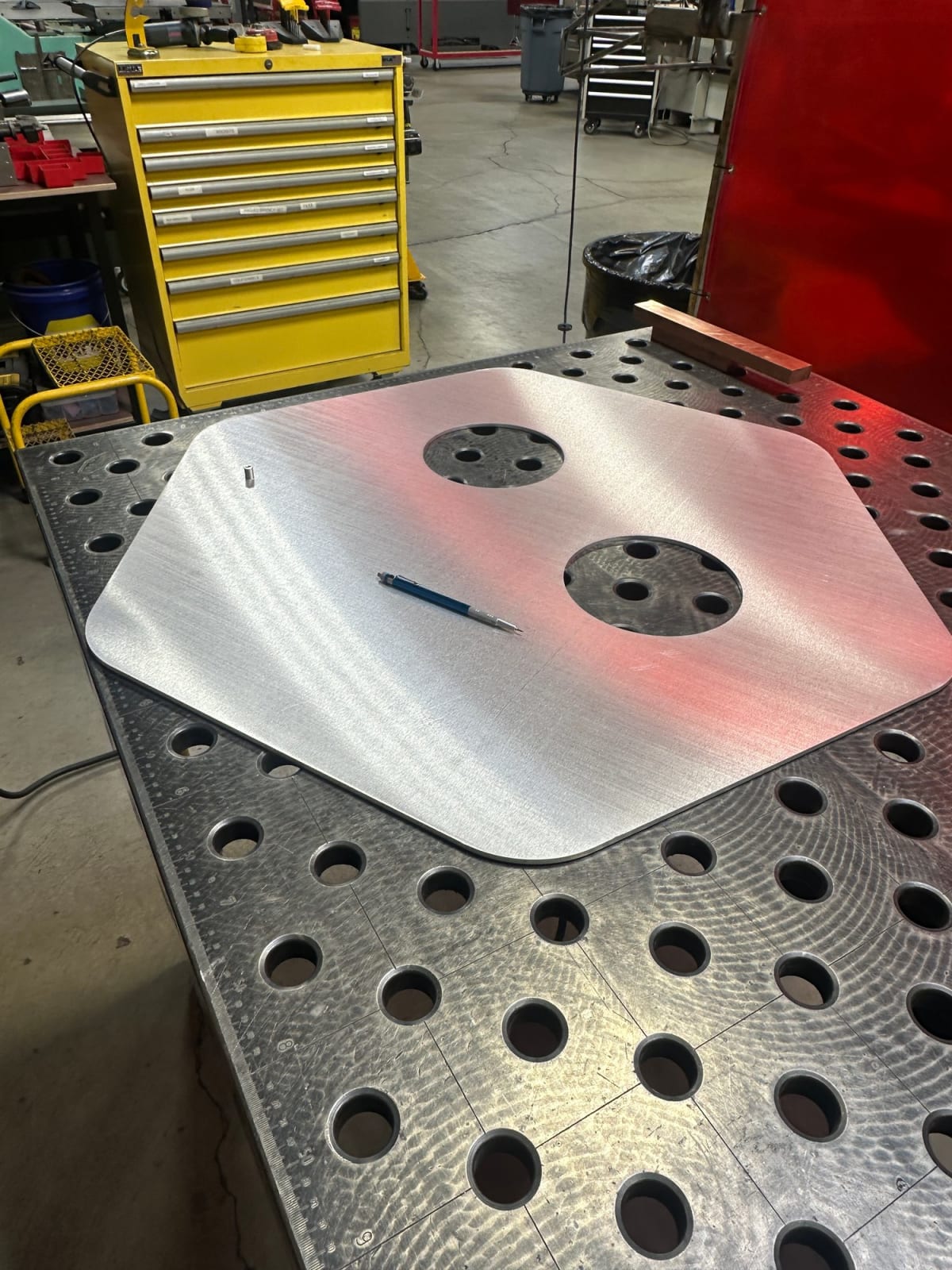
Custom sign. Custom mounts. We ordered the standoffs for this aluminum sign. Then we had them welded in place.
The clean face starts on the back. Here’s how metal, mounting, welding, and finish come together.
Start My Project
Why did this sign need custom welded standoffs?
The mounts had to suit the sign. Their size, threads, and placement shape the wall connection and the gap behind the panel. We custom-ordered the standoffs and coordinated the welding.
Rear mounts keep fasteners off the visible face. They also need room for installation and future removal. The hardware is part of the design from the start.
This is one step in a larger build. These photos show fabrication in progress, before the final finish and installation.

Which aluminum alloys can be welded for signs?
5052 sheet and 6061 or 6063 extrusions are common weldable options. Shape, thickness, mounting loads, and finish guide the choice. Not every aluminum alloy is suitable for conventional arc welding.
The grade matters on both sides of the joint: sign panel and standoff. Filler metal has to match the combination and the finish plan. There is no single filler for every aluminum sign.
This sign uses a mid-grade aluminum alloy. The grades above are common examples, rather than its exact alloy designation.
Is TIG or MIG better for an aluminum sign?
Both can work. AC TIG offers close control for small, detailed joints. MIG can suit longer welds and larger assemblies. The fabricator chooses the process for the actual joint and panel thickness.
What preparation helps an aluminum weld?
Remove grease first. Then remove the oxide with a clean stainless steel brush reserved for aluminum. Keep the joint dry and clean. Oil, moisture, and oxide can cause weld defects.
How do you limit heat distortion?
Start with fit-up and fixturing. Control heat input and plan the weld sequence. A representative sample helps reveal warping or marks on the visible face before production.
Does welding change the aluminum’s strength?
It can soften the metal beside the weld. Mount design must account for the welded condition. A neat-looking weld alone does not establish the connection’s load capacity.
What does the aluminum sign welding process look like?
Here’s the workshop sequence: panel, hardware, clamps, and work at the rear mounts. Open any photo for a closer look.


Can you see the standoff welding in motion?
Yes. This short workshop clip shows work at the clamped sign panel. The fixture holds the assembly while the welder works at a rear mounting point.
Video description: A welder positions the torch beside the clamped aluminum panel. The arc starts at the mounting point. The camera moves back to show the welder and worktable. This clip is silent.
How do you plan a custom finish on a welded aluminum sign?
Choose the finish before welding. Apply the final cosmetic finish after fabrication. Alloy, filler, weld placement, and surface preparation all affect the result.
Powder coating adds a colored coating over the metal. Anodizing grows an oxide layer from the aluminum itself. Welds can show a different shade after anodizing. A full-process sample helps set realistic expectations.
Threads need a plan, too. Masking or dimensional allowance may be needed to preserve hardware fit. For a matte anodized finish, agree on the bead-blast texture with the finisher before approving a sample.
Want the earlier design thinking? Our custom lobby sign planning note walks through hidden mounts and black anodizing.
What else matters before a welded sign goes on the wall?
The whole connection matters: welds, standoffs, fasteners, and wall anchors. Sign weight, wall construction, exposure, and access determine the mounting plan. Exterior signs also need wind loads considered.
In damp or coastal locations, dissimilar metals can create corrosion problems. Compatible hardware and suitable isolation belong in the plan. Our Bay Area sign installation team reviews the site conditions alongside fabrication.
Can you fabricate a custom aluminum sign for my Bay Area business?
Yes. SF Bay Signs develops custom signage from our Berkeley shop for businesses across the San Francisco Bay Area. Send your logo, target size, wall photos, installation address, and finish ideas. We’ll help turn them into a buildable sign.
Start My ProjectWhere does the welding guidance come from?
Our project photos show the work. Manufacturer and industry guidance informs the general material, welding, and finish answers above.