
How do we wire a backlit LED sign in the Bay Area?
Power. Control. Glow. We set up the LEDs on the bench. Then we tested the light in the sign.
This custom sign shows how LED shape, color, voltage, and controls work together.
Start My Project
What does this backlit sign build show?
Flexible LED tape. Short connected runs. A handheld remote. The tape is marked DC24V. The remote is labeled RF Wireless.
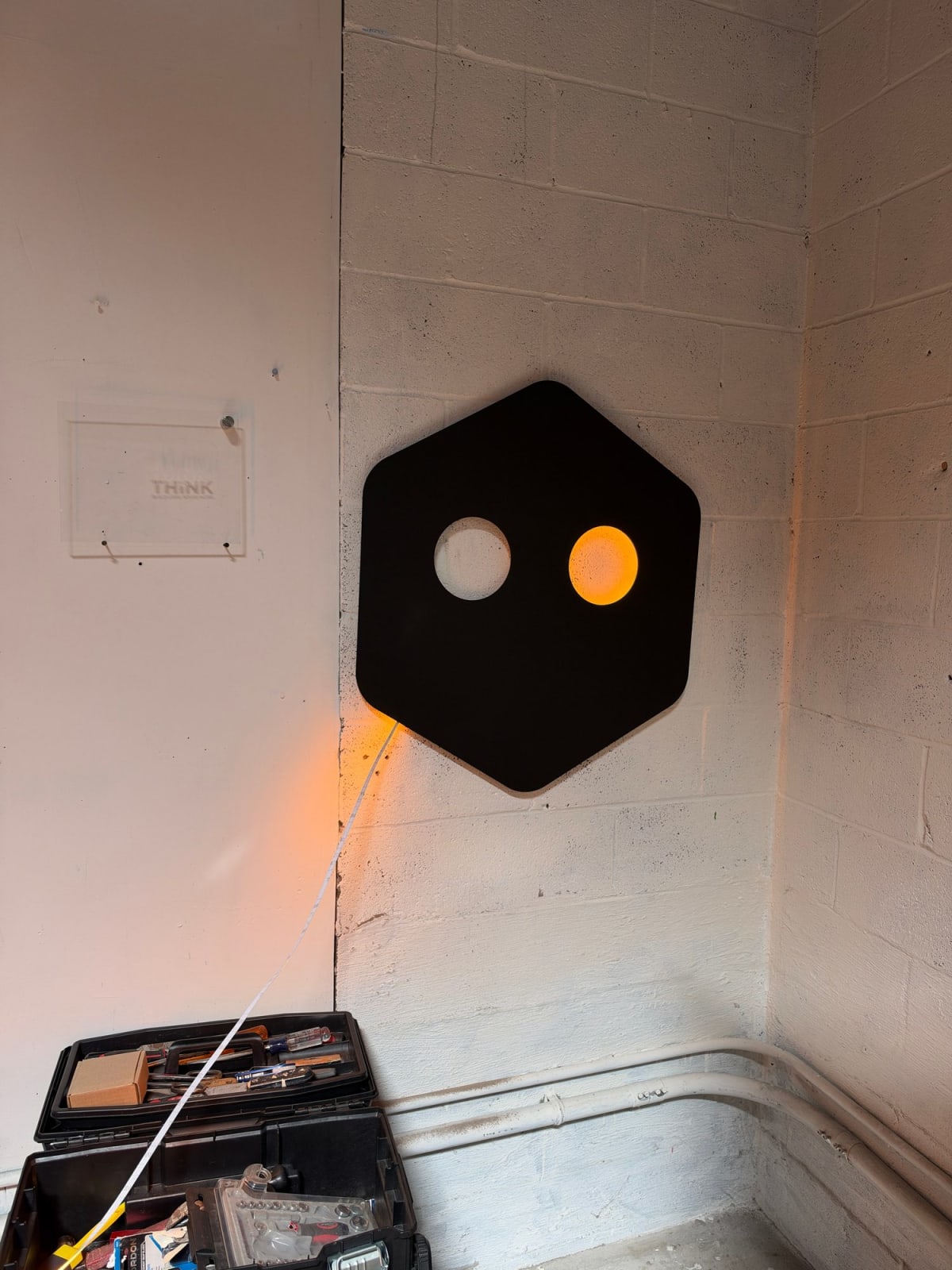
The light appears amber during the test. First on the bench. Then in the sign’s right circular opening on the workshop wall. This is a lighting test during fabrication.
For the metalwork behind this build, see our custom aluminum sign welding project.
See the mounted sign in our anodized aluminum sign installation project.

Are flexible or rigid LEDs better for a custom sign?
It depends on the shape. Flexible tape can follow supported curves. Rigid bars suit straighter runs. Wired sign modules let small rigid light sources sit around a letter or logo.
Swipe the table to see the tradeoffs.
| LED format | Benefit | Tradeoff |
|---|---|---|
| Flexible tape | Low profile; follows suitable curves. | Bend direction, cut points, cooling, and mounting support matter. |
| Rigid bar or board | Stable alignment for straight sections. | Cannot bend around tight contours; transitions need separate pieces or leads. |
| Wired sign modules | Positionable light sources around letter shapes. | Module spacing and lenses affect the glow; more wiring to manage. |
Can flexible LED tape bend in every direction?
No. Standard tape usually bends along its length, not sideways around a flat outline. Side-bending products are designed differently. Follow the specified bend direction and minimum radius. Sharp folds or twists need explicit product approval.
Does COB tape guarantee a smooth backlight?
No. COB tape uses closely packed LED chips to create a more continuous light source. Spacing, diffusion, wall distance, and reflections still shape the result. Flexible tape also needs the specified heat-dissipating mounting surface.
Is a colored LED the same as a color-changing LED?
No. A fixed-color LED produces one color: white, red, amber, or another specified shade. RGB LEDs mix red, green, and blue to create multiple colors. RGBW adds a separate white channel.
Why choose fixed-color LEDs?
A consistent glow and simpler controls. They suit signs that should keep one look. Dimming changes brightness, not color. A fixed-color system cannot become RGB just by adding a color remote.
What do color-changing LEDs add?
More lighting choices, with more control requirements. RGB and RGBW need compatible output channels and wiring. A dedicated white channel gives another option beyond mixing RGB to approximate white.
What is tunable white?
Adjustable warm-to-cool white light, often called CCT control. It is a different choice from RGB color mixing. The controller must support the LED’s warm and cool channels.
Are addressable LEDs different again?
Yes. They use a compatible data controller to control pixels or groups separately. Ordinary RGB tape typically changes the whole connected run together. “COB” alone does not identify either control system.
What voltage does a backlit LED sign use?
Many tape and sign-module systems use 12V or 24V DC. This project’s tape is marked 24V DC. The LED’s rated voltage must match the power supply output, and the controller must support that voltage and load.
Voltage is only one rating. Total wattage, controller current limits, cooling, and wire length matter too. Some LED systems use constant-current drivers instead of constant-voltage supplies. The product specification decides.
Why can a long LED run look dim at one end?
Voltage drop can reduce brightness along the run. For the same power, 24V draws less current than 12V. That can help, but it does not remove run-length limits. Wiring and feed locations still need a plan.
Which part is low voltage?
The supply’s DC output feeds the rated LEDs and controls. The building-power input is a separate part of the installation scope. A 24V tape label does not specify the entire sign’s electrical installation.
What is the difference between RF and infrared LED remotes?
RF sends radio signals to a paired receiver. Infrared usually needs a clear path to its sensor. RF can be useful when controls are concealed, but metal housings and receiver placement can affect range.
RF describes the remote signal, not the LED color system. It can control a single-color dimmer, tunable white, or a color-changing setup. The remote and receiver still have to be compatible.
Can any LED remote work with any controller?
No. Pairing method, control protocol, channel count, voltage, and current capacity need to fit the system. The remote sends commands. It does not supply the LEDs’ power.
What do we check before the sign leaves the workshop?
Color. Brightness. Shadows. Control response. We check the light in the actual assembly and at the planned wall distance. The photos below show the workbench and a temporary wall test, with wiring still visible.


Can you build a custom backlit sign for my Bay Area business?
Yes. Send your logo, size, wall photos, installation address, and the glow you want. Our Berkeley sign shop can help plan the metalwork, lighting, controls, and Bay Area installation scope together.
Start My ProjectWhere does the LED guidance come from?
Our photos document this build. Manufacturer guides inform the general LED, power, and control comparisons.