How do you securely install a custom anodized aluminum sign?
Solid fixing. Clean face. The sign is custom. The wall connection has to fit.
This Embo project brings the metalwork and lighting onto the wall. Here’s what matters when choosing the drill, lag screws, and anchors.
Start My Project
What should an aluminum sign’s mounting hardware hold onto?
Sound structure. The load travels from the sign through its rear mounts and wall fixings into the building. Paint, plaster, cladding, and other surface finishes do not establish that connection.
We identify the supporting material before choosing hardware. Wood framing, concrete, solid brick, and hollow block need different approaches. Sign weight, mounting distance, and the condition of the wall all matter.
This close-up shows a wall fastener and a nearby hole. Its head alone does not identify the anchor hidden behind it.

When does sign installation need a hammer drill?
A hammer drill combines rotation with repeated impacts to drill suitable masonry. A rotary hammer offers a different hammering mechanism for demanding concrete work. The wall material and anchor instructions determine the drilling method.
Wood pilot holes use rotation, without hammer action. Some hollow masonry also needs rotation only to protect its thin internal webs. The selected anchor’s instructions set the drilling mode.
Which drill bit should match a sign anchor?
The diameter and bit type specified for that anchor and supporting material. An SDS shank describes how a bit fits the tool; it does not set the required hole diameter. Worn or unsuitable bits can produce the wrong hole.
What do you check before drilling mounting holes?
The layout, wall construction, and possible concealed services. We transfer the mounting pattern, verify level, and confirm the planned fixing locations. Access and cable routing belong in that check, before the first hole.
Which lag bolts or anchors should secure a custom aluminum sign?
Start with the wall. “Lag bolt” commonly means a lag screw with coarse threads for wood. Concrete screws and expansion anchors are different fastener systems. A similar-looking hex head does not make them interchangeable.
When are lag screws suitable for sign mounting?
When the specified screw engages suitable wood framing or structural backing. Pilot holes and thread engagement follow the fastener’s instructions and the wood conditions. Drywall alone does not provide the wood connection a lag screw needs.
Can you put a wood lag screw directly into concrete?
No. Use a fastener approved for the concrete, or a compatible lag shield where that system is specified. The shield and lag screw must work together. Concrete screws have their own threads and installation requirements.
Can the same anchor work in solid and hollow masonry?
Only if its approval covers the actual material and installation conditions. Solid concrete, solid brick, and hollow block differ. A capacity published for one material does not establish capacity in another.
Does a longer bolt always make a stronger sign mount?
No. Useful engagement in the supporting material matters. So do the anchor rating, bracket thickness, wall condition, and load direction. Decorative layers and the gap behind the sign do not count as anchorage depth.
Why do hole depth, cleaning, and tightening matter?
The anchor depends on the hole. We follow its specified diameter, depth, cleaning method, and installation torque or setting procedure. Those requirements vary by product. Dust, an oversized hole, or incorrect tightening can compromise the fixing.
Tightening also affects the sign hardware. More force is not a universal improvement. The connection must seat properly without crushing a spacer, bending the panel, or damaging its finish.
Why keep sign anchors away from edges and other holes?
Edges, joints, and closely spaced anchors can reduce available capacity. The selected anchor’s data sets the limits for the actual material. Moving a hole to make the sign fit can change the connection design.
Does an interior sign need the same fixing plan as an exterior sign?
Both need a sound connection. Exterior signs add exposure and wind-loading considerations. Even indoors, a sign held away from the wall can increase the demand on its mounts. Weight alone is not the whole design.

What happens before the sign goes onto the wall?
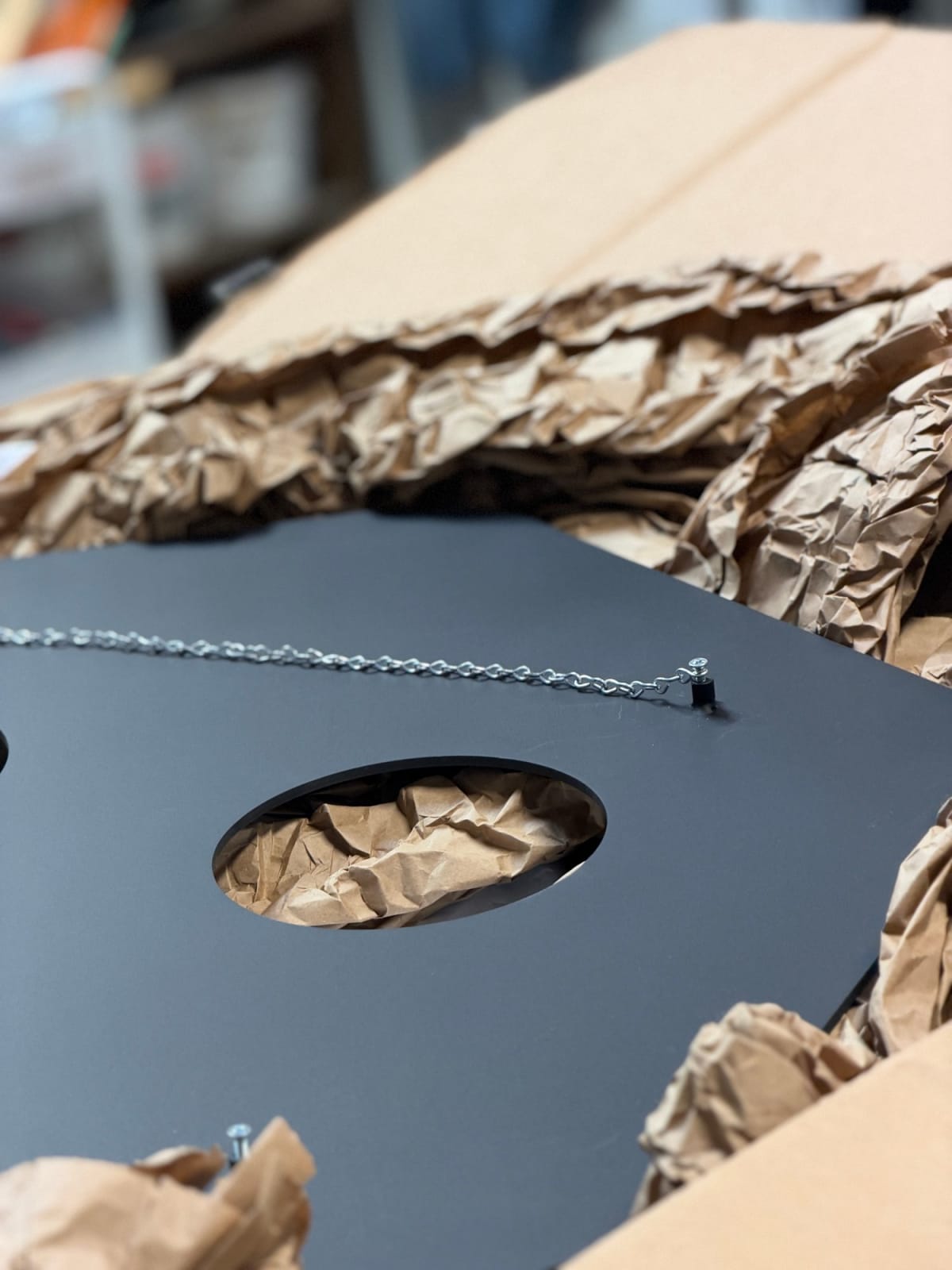
Unpack carefully. Check the rear hardware. Protect the face. Confirm the layout and access. These photos show the packed panel and its preparation at the office.


What does the installed anodized aluminum sign look like?
A clean black face. Light around the edge. Two illuminated openings. The photos show amber and purple lighting checks, close views, and the sign seen across the office.



Can you see the installed sign in the room?
Yes. This short walkthrough shows the mounted sign with amber lighting, then the surrounding office. It gives a sense of the sign’s scale and viewing distance.
Video description: The camera shows the illuminated sign above a whiteboard, moves across the office workstations, and returns to the sign. This clip is silent.
Can you install a custom aluminum sign for my Bay Area business?
Yes. Send the sign size, weight if known, rear mounting details, wall photos, and installation address. Our Berkeley sign shop can help plan custom sign installation across the Bay Area, including mounting, access, and lighting handoffs.
Start My ProjectWhere does the drilling and fastener guidance come from?
Our photos document this installation. Tool and anchor manufacturer instructions inform the general comparisons. The selected fixing’s data governs its installation requirements.