
Essential Guide: Weep Hole Placement in Illuminated Signs - A Bay Area Sign Professional's Perspective
Weep holes are small drainage openings that keep moisture from pooling inside illuminated sign cabinets. Here's where they belong, what to avoid, and how to keep them working through Bay Area fog and rain.
Key takeaways
- Weep holes let trapped moisture drain from illuminated sign cabinets—small detail, big protection.
- Place them at the lowest points; wide or long cabinets often need multiple drainage points.
- Don't block them with sealant, paint, or mounting hardware that prevents water from exiting.
- Check and clear them periodically, especially during the Bay Area rainy season.
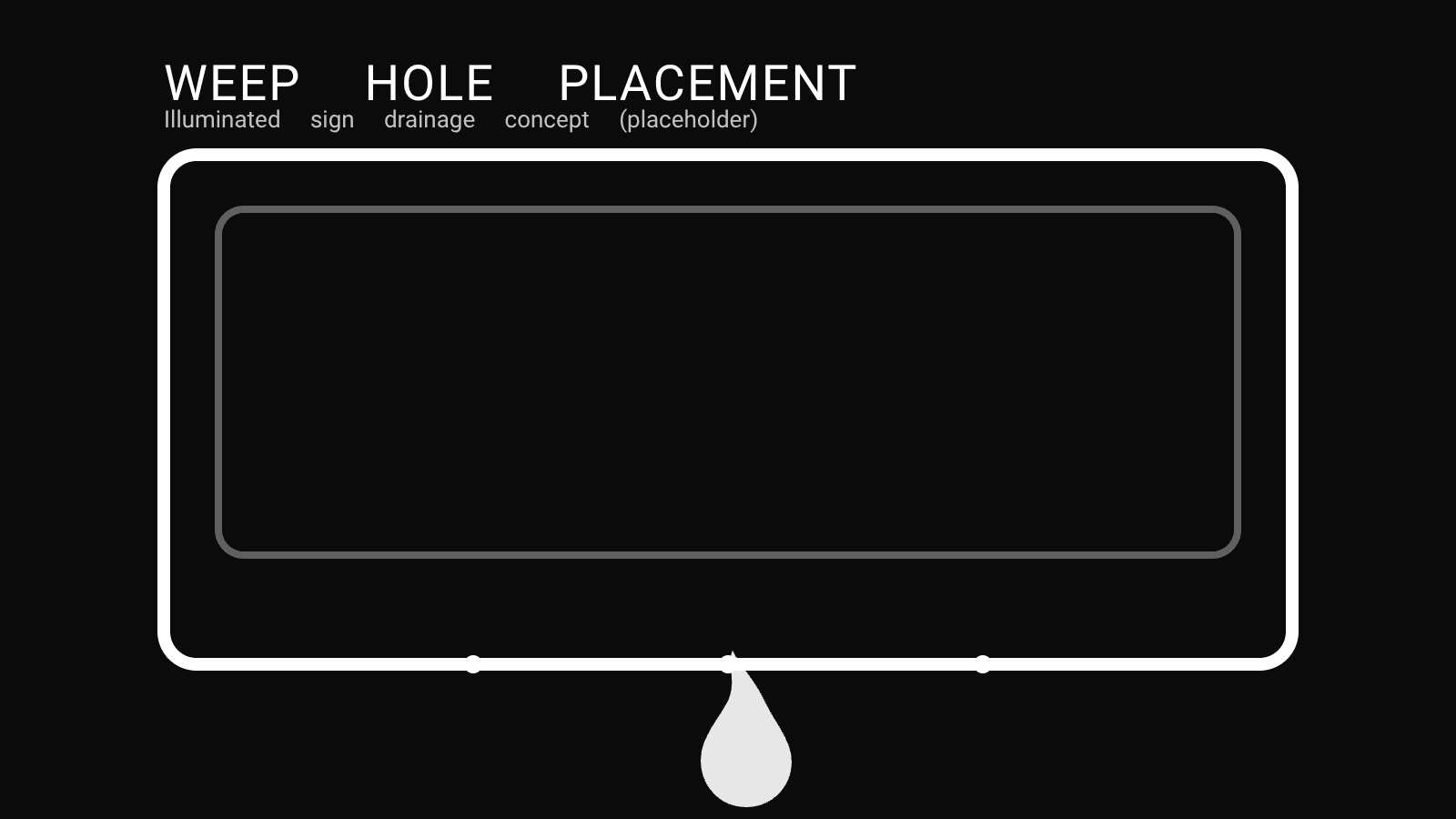
Weep holes are small drainage openings in illuminated sign cabinets. They let trapped moisture escape before it can corrode components, stain faces, or create electrical headaches.
In the Bay Area, fog and winter storms mean moisture management is part of sign longevity. Use this guide to place weep holes where they actually work, avoid common mistakes, and keep drainage paths clear.
What is a weep hole in an illuminated sign?
Illuminated signs aren't perfectly watertight forever. Temperature swings create condensation, and wind-driven rain can find its way into seams over time. Weep holes give that water a planned exit point so it doesn't pool inside the cabinet. When choosing materials for custom aluminum signs or cabinet-style signage, drainage planning should be part of the conversation from the start.
Where should weep holes be placed?
Placement is about gravity and a clear path out. Municipal codes often specify weep hole requirements—for example, some jurisdictions require weep holes between 3/8" and 1" in diameter for outdoor illuminated signs. A few practical rules help most cabinets drain reliably:
- Put weep holes at the lowest points of the cabinet—typically along the bottom edge.
- Use multiple drainage points on wide cabinets so water doesn't get trapped at one end.
- Make sure interior structure, wiring channels, or sealant don't block the water's path to the hole.
- Confirm water can exit freely (not directly into a wall, raceway, or mounting surface that stops drainage).
How big should weep holes be?
There's no one-size-fits-all diameter. Holes should be small and discreet, but large enough to drain without clogging. If you're working from a cabinet design or manufacturer drawing, follow it—and if you're retrofitting an existing sign, have a sign professional confirm the safest approach.
Why moisture control matters for UL-listed signs
Cabinet signs contain LED boards, power supplies, and low-voltage wiring inches from a translucent face. UL-listed electric signs undergo temperature cycling, moisture tests, and overload simulations as finished units—but those tests assume proper drainage is maintained over the sign's lifetime. Without functional weep holes, even a UL-listed cabinet can develop moisture-related issues.
Common installation mistakes to avoid
- Too high: A hole placed above the low point leaves water below it.
- Too few: One hole often isn't enough on longer cabinets.
- Blocked exits: Mounting hardware, trim, or sealant can unintentionally "cap" the drainage path.
- Painted over: Overspray and heavy coatings can close the opening.
Maintenance checks for Bay Area weather
Weep holes only help if they stay open. A quick seasonal check can prevent bigger repairs:
- Inspect during the rainy season and after major storms.
- Clear debris, spider webs, and grime that can block drainage.
- Look for warning signs: recurring condensation, rust staining, or water marks inside the cabinet.
For a deeper look at keeping LED modules performing well over time, see our guide on LED module spacing calculations.
When to call a pro
If you suspect standing water inside an energized sign, don't treat it like a DIY project. Turn the sign off at the breaker and contact a qualified sign professional.
If you're planning a new illuminated sign or want help troubleshooting moisture, see our installation page or start a project.