
The Secret Life of Stolen Signs: A Confession from the Bay Area's Most Notorious Sign Thief
Every sign tells a story. Some stories involve bolt cutters at 3 AM. Here's what a career sign thief taught us about protecting your business signage.
Key takeaways
- Sign theft costs businesses $500–$5,000 per incident, plus weeks of lost visibility.
- Vintage neon and unique metal signs are primary targets; modern aluminum composite signs are less appealing to thieves.
- Tamper-resistant fasteners, welded mounts, height, and camera coverage are the most effective deterrents.
- Design choices matter—signs with prominent business branding are harder to resell and less likely to be stolen.
- Most sign theft is opportunistic; basic security measures can redirect thieves to easier targets.
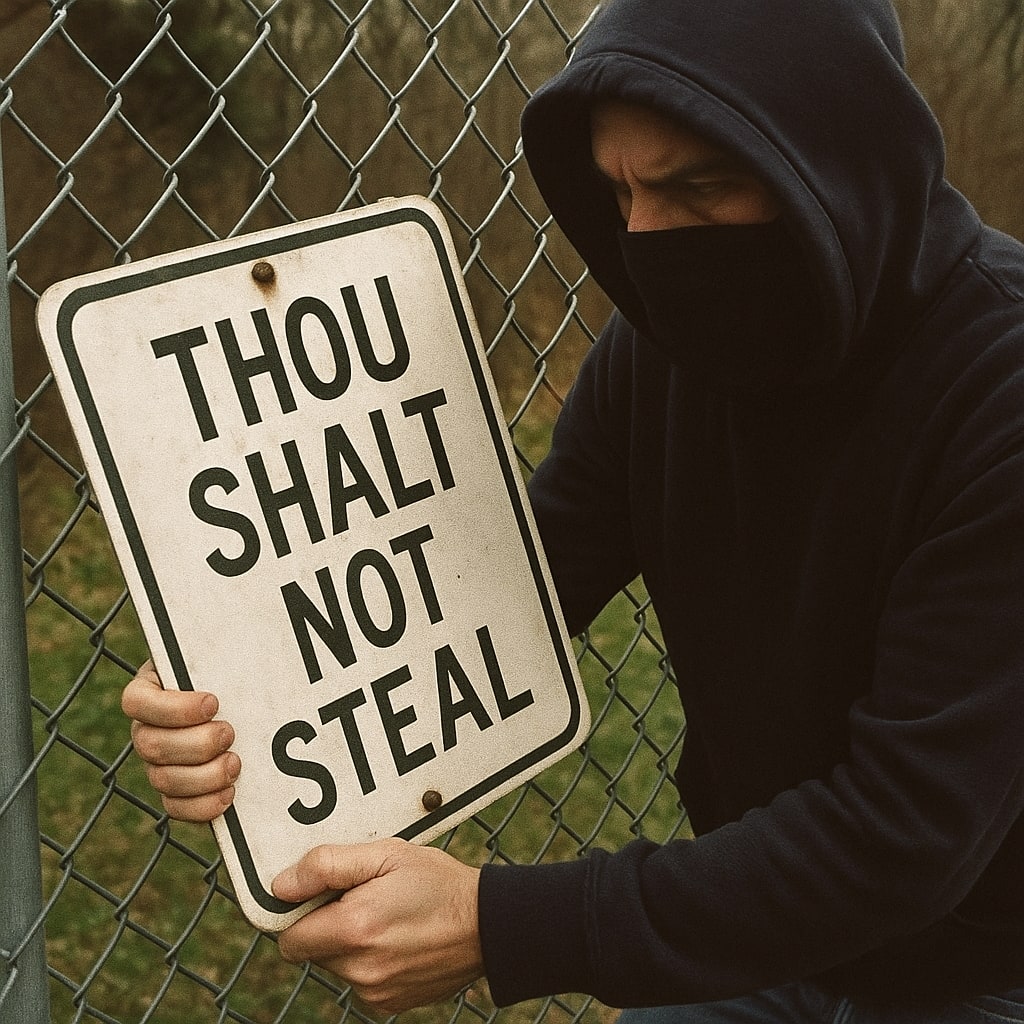
Sign theft is a real problem for Bay Area businesses—and most owners don't think about it until they wake up to an empty storefront. I sat down with Marcus (not his real name), a self-described "sign collector" who spent 17 years acquiring signs through less-than-legal means. What he shared offers a rare look into the psychology of sign theft and, more importantly, how to protect your business signage.
Why do people steal business signs?
The psychology of sign theft is different from typical property crimes. There's rarely a direct financial incentive unless you're targeting rare vintage pieces. It's more about the hunt, the trophy, the story you tell when someone asks about the "ADULT BOOKSTORE" sign hanging in your living room.
For business owners, sign theft is a legitimate nightmare. You wake up one morning and your $3,000 custom aluminum composite panel is just gone. Your storefront looks abandoned while you scramble to get a replacement fabricated—typically a 2–4 week wait for custom work.
Most stolen signs are never recovered. They end up in collections, garages, man caves, or sold to collectors who don't ask questions. The secondary market for vintage signage is surprisingly robust.
What types of signs get stolen most often?
Marcus has opinions about signs the way wine snobs have opinions about Bordeaux. Here's his ranking of most-stolen sign types, which doubles as a security checklist:
- Vintage neon signs: The holy grail, especially anything from the 1950s–70s with original tubes. Marcus once spent three hours removing a "VACANCY" sign from an abandoned motel.
- Metal street signs: Easy to remove, iconic, and they fit in a backpack. Stop signs, one-way signs, street name signs.
- Porcelain enamel signs: Heavy but valuable. Gas station signs, old Coca-Cola advertisements—anything with that glossy finish that screams "built to last."
- Custom business signs with unique designs: If your sign is weird enough, someone wants it. Marcus has a sign from a taxidermy shop that just says "STUFF IT" with a cartoon deer.
- LED message boards: Not for the aesthetic value, but because they're expensive and easy to resell.
The pattern? Anything with character, history, or resale value is at risk. Modern printed vinyl on aluminum composite is less appealing to thieves. Marcus mentioned that basic business signs also get stolen by competitors trying to sabotage each other—a whole different level of petty.
How do you protect signs from theft?
When I asked Marcus what would actually stop him, he laughed. "Nothing stops someone who really wants it. But you can make it annoying enough that they move on to easier targets." That's basically the philosophy behind all security measures.
Here's what actually works, according to someone who spent nearly two decades circumventing these exact measures:
- Security screws with unique heads: Torx, hex, or custom security bits require special tools. Marcus carries a full set, but most casual thieves don't. Tamper-resistant fasteners are widely available and add meaningful friction.
- Welded mounting brackets: If you can weld your sign's mounting hardware directly to the structure, do it. Marcus hates welded signs. "You need an angle grinder, and those are loud. Neighbors call the cops."
- Height and accessibility: Mount signs high enough that you need a ladder. Most sign thieves are opportunistic, not prepared. Our professional installation team can help you determine optimal placement.
- Cameras and lighting: Visible security cameras are a real deterrent. Marcus has walked away from dozens of signs because of cameras. According to Vector Security research, 44% of shoplifters said signage alone didn't bother them—but physical surveillance changes the calculation.
- GPS trackers: For high-value signs, some businesses embed GPS trackers. Marcus didn't know about this until I mentioned it. "That's some next-level paranoia," he said. "I respect it."
Most sign theft is opportunistic. Make your signs annoying to steal, and thieves will move on to the business next door with the easily-removable vintage neon.
Which sign materials deter theft?
Material choice matters more than you'd think. Marcus has strong opinions about substrates.
Aluminum composite panels (Dibond): These are Marcus's least favorite to steal. "They're light, which is good, but they're also boring. No one's collecting Dibond signs. They're just... functional." For business owners, this is great news. Your modern, professionally-printed Dibond sign is less likely to get stolen than vintage alternatives.
PVC and foam board: Even less appealing to thieves. "Why would I steal plastic?" Marcus asked. These materials are cheap to replace, which is their own form of theft deterrent.
Metal and neon: The danger zone. If you're using vintage metal or neon, you're basically hanging a "STEAL ME" sign on your sign. Marcus's eyes lit up when I mentioned a client considering a custom neon installation. "Where?" he asked immediately, before catching himself.
If you want a sign that's theft-resistant, go modern. Printed graphics on aluminum composite, LED lighting instead of neon, contemporary designs instead of vintage aesthetics. Not as romantic, but your sign will still be there in the morning.
What does sign theft actually cost a business?
Sign theft isn't just an inconvenience—it's a legitimate business expense. The average cost to replace a stolen business sign ranges from $500 to $5,000, depending on size, materials, and complexity. For a small business operating on thin margins, that's significant.
But the financial impact goes beyond replacement costs:
- Lost visibility: 2–4 weeks waiting for custom fabrication
- Customer confusion: Your storefront looks abandoned
- Administrative time: Police reports, insurance claims, vendor coordination
One restaurant owner I spoke with had his custom-designed fascia sign stolen three times in two years. Each replacement cost $2,800. After the third theft, he switched to a simpler design with better security hardware and hasn't had issues since. "I loved that original sign," he said. "But I love not hemorrhaging money more."
Insurance sometimes covers sign theft, but many business policies have high deductibles that make claims impractical for anything under $1,000. Even when insurance pays, your premiums might increase.
How can sign design deter theft?
Here's the paradox: you want your sign to be eye-catching and memorable, but not so eye-catching that someone decides they need it for their personal collection.
Make it distinctive but not collectible: Custom designs that reflect your brand are great. Vintage-looking designs that scream "I'm worth money on eBay" are asking for trouble.
Integrate your branding deeply: Signs with prominent business names and logos are less likely to be stolen because they're harder to repurpose. A generic "OPEN" sign? Easy to steal and use anywhere. A sign that says "TONY'S PIZZA - SINCE 1987" with your logo? Less versatile for thieves.
Consider modular designs: If you're worried about theft, design your signage in sections. A stolen panel is easier to replace than an entire sign system, and thieves are less likely to take the time to remove multiple components.
Ready to design theft-resistant signage for your business? Start your project with our team.
Why did Marcus finally stop stealing signs?
After seventeen years, Marcus has mostly retired. Not because he got caught (he never has), but because he ran out of space. His warehouse is full—floor to ceiling, wall to wall, nothing but signs. "It's like a museum," he said, "except no one can visit because it's all stolen property."
There's something sad about it. All these signs, all this history, locked away where no one can see them. Marcus admitted he sometimes wonders if he should have just bought signs legally. "But where's the fun in that?" he asked—the rationalization of someone who spent seventeen years justifying theft as historical preservation.
When I asked if he felt guilty, he thought about it for a long time. "Sometimes. Especially the small businesses. They didn't deserve it."
What every business owner should know about sign security
Strip away the story of Marcus and his warehouse of stolen dreams, and you're left with practical truths about protecting your business signage:
- Sign theft is more common than you think, especially in urban areas with active collector markets
- Vintage and unique signs are primary targets; modern materials are safer
- Security hardware is worth the investment—use tamper-resistant fasteners and welded mounts when possible
- Height and visibility matter—mount signs high and in well-lit, camera-monitored areas
- Insurance might not cover theft, so factor replacement costs into your budget
- Design choices can deter theft—make your signs distinctive to your business, not collectible
- GPS tracking is becoming more common for high-value signage
- Most sign theft is opportunistic, so basic security measures are surprisingly effective
The sign industry doesn't talk about theft enough, probably because it's depressing to admit that your beautiful custom fabrication might end up in someone's garage. But awareness is the first step toward prevention. Understanding how thieves think helps you make smarter decisions about materials, mounting, and security.