
Best Glue for Acrylic Sign Letters: A Complete Adhesive Guide
Choosing the right adhesive for acrylic sign letters makes the difference between a professional installation that lasts years and letters falling off your wall. Here is what actually works.
Key takeaways
- Solvent-based acrylic cement (like Weld-On 4) creates the strongest bond by chemically fusing acrylic surfaces together.
- Epoxy resin works well for heavy letters and mixed materials but can yellow over time on clear acrylic.
- Super glue (cyanoacrylate) is fast but creates brittle bonds that may crack—best for small repairs only.
- Silicone adhesive offers flexibility and weather resistance for outdoor signs but provides weaker holding strength.
- Always clean surfaces thoroughly and test your adhesive on scrap acrylic before committing to the final installation.
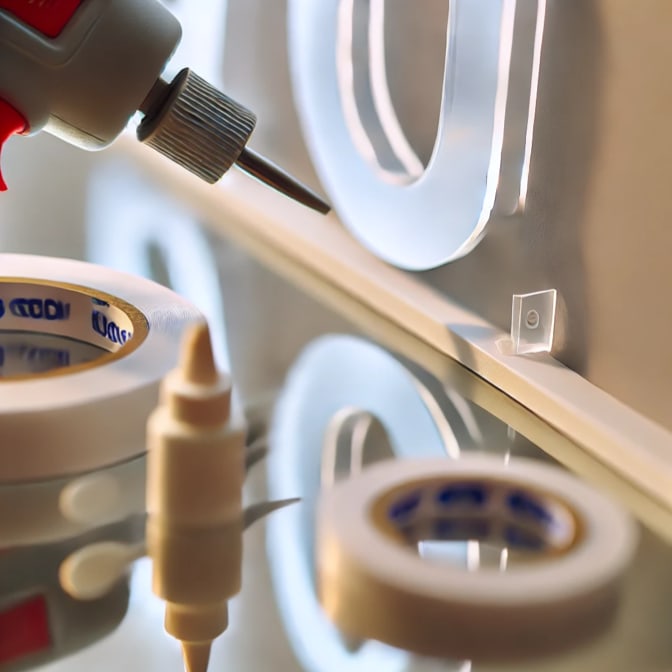
Choosing the right adhesive for acrylic sign letters is more important than most people realize. Use the wrong glue, and you risk cloudy joints, cracking letters, or—worse—your signage falling off the wall in front of customers. The good news: once you understand which adhesives work best with acrylic, getting professional results becomes straightforward.
Why does acrylic require special adhesives?
Acrylic (also called plexiglass or PMMA) is a thermoplastic that responds differently to adhesives than wood, metal, or other common sign materials. Standard craft glue and many general-purpose adhesives either fail to bond properly or create visible cloudiness called "crazing" that ruins the appearance of clear acrylic.
The most effective acrylic adhesives work through solvent welding—they chemically soften the acrylic surfaces and fuse them together as the solvent evaporates. This creates a bond that is literally as strong as the acrylic itself, with an optically clear joint that becomes nearly invisible.
What are the best adhesive options for acrylic letters?
Five main adhesive categories work for acrylic sign letters, each with distinct advantages depending on your application, letter size, and whether the sign goes indoors or outside.
Solvent-based acrylic cement: the professional standard
Products like Weld-On 3, Weld-On 4, and Weld-On 16 are industry standards for bonding acrylic to acrylic. These water-thin cements work through capillary action—you hold the pieces together and apply the cement along the joint, where it wicks in and fuses the surfaces.
Best for: Professional sign installations, display cases, permanent mounting of acrylic letters to acrylic backing panels.
Limitations: Requires precise fit between surfaces (minimal gap-filling ability), releases strong fumes during application, and demands practice to apply without drips or bubbles.
Epoxy resin: the heavy-duty option
Two-part epoxy adhesives provide excellent holding strength for heavy acrylic letters or when bonding acrylic to other materials like metal, wood, or painted drywall. Epoxy creates a mechanical bond rather than a chemical weld, which makes it more versatile for mixed-material applications.
Best for: Heavy dimensional letters, mounting acrylic to non-acrylic substrates, applications requiring gap-filling properties.
Limitations: According to acrylic bonding research, epoxy can yellow over time when exposed to UV light, leaving a visible bond line on clear acrylic projects. It also requires precise mixing ratios and longer cure times.
Acrylic adhesive tape: the clean alternative
High-bond acrylic foam tapes (like VHB tape) offer a mess-free installation method for lightweight to medium-weight letters. The tape provides instant holding power while the acrylic adhesive develops full bond strength over 24-72 hours.
Best for: Clean installations without visible adhesive, lightweight letters, renters or situations requiring future removal.
Limitations: May struggle with heavy or thick dimensional letters, requires adequate surface area for proper bond.
Silicone adhesive: the flexible performer
Silicone-based adhesives excel in outdoor applications where temperature swings cause materials to expand and contract. The flexible bond absorbs movement without cracking, and silicone resists moisture, UV exposure, and temperature extremes.
Best for: Outdoor signage, applications requiring weather resistance, situations where slight flexibility prevents stress cracking.
Limitations: Lower holding strength than solvent cements or epoxy, dries to an opaque or translucent finish (not ideal for clear acrylic joints), requires 24+ hours for full cure.
Cyanoacrylate (super glue): the quick fix
Super glue bonds acrylic quickly and provides strong initial hold for small repairs. However, the bond tends to be brittle and can crack under stress or temperature changes. It may also leave white "blooming" residue on clear acrylic from the fumes during curing.
Best for: Emergency repairs, small craft projects, temporary holds.
Limitations: Brittle bonds that degrade over time, white residue on clear surfaces, not recommended for permanent sign installations or heavy letters.
How do you apply adhesive to acrylic letters correctly?
Proper application technique matters as much as choosing the right adhesive. Follow these steps for professional results:
- Clean all surfaces thoroughly: Use isopropyl alcohol to remove dust, fingerprints, and any residue. Grease and dirt prevent proper bonding and can cause adhesive failure.
- Test on scrap material first: Apply your chosen adhesive to leftover acrylic pieces to verify bond strength and appearance before committing to the final installation.
- Apply adhesive sparingly: With solvent cements especially, less is more. Excess adhesive can run outside the joint and cause visible marks or crazing.
- Use proper clamping: Many adhesives (especially epoxy) benefit from firm, even pressure during curing. Spring clamps or weights help maintain contact while the bond develops.
- Allow full cure time: Resist the urge to handle or install pieces too soon. Most adhesives reach handling strength quickly but need 24-48 hours for maximum bond development.
Which adhesive should you choose for your project?
Your specific application determines the best adhesive choice:
- Acrylic letters on acrylic backing: Weld-On 4 or similar solvent cement for invisible, permanent bonds.
- Acrylic letters on painted walls: High-bond acrylic foam tape or construction adhesive designed for plastics.
- Heavy dimensional letters: Two-part epoxy for maximum holding strength.
- Outdoor signage: Weld-On 16 (heavy-bodied solvent cement) or silicone adhesive for weather resistance.
- Temporary or rental installations: Removable mounting tape or low-bond adhesive solutions.
Ready to install professional acrylic signage?
Understanding adhesives is just one part of successful acrylic sign installation. If you need help with your signage project—from design through professional installation—SF Bay Signs fabricates and installs custom acrylic letters throughout the San Francisco Bay Area.
Start your project to discuss your signage needs with our team, or explore our custom acrylic sign options to see what is possible for your business.