
Print Media Solutions for Small Business Launches: Your Complete Guide to Making a Lasting First Impression
Physical marketing materials build trust and drive action in ways digital ads cannot replicate. Here is what works for small business launches—and how to prioritize your print budget.
Key takeaways
- Print materials drive 77% brand recall versus 46% for digital ads, according to Newsworks research.
- Direct mail achieves a 9% response rate—far higher than the 1% typical of email campaigns.
- Business cards, storefront signage, and A-frame signs cover most customer touchpoints during a launch.
- Integrating print with digital (QR codes, unique promo codes) amplifies both channels.
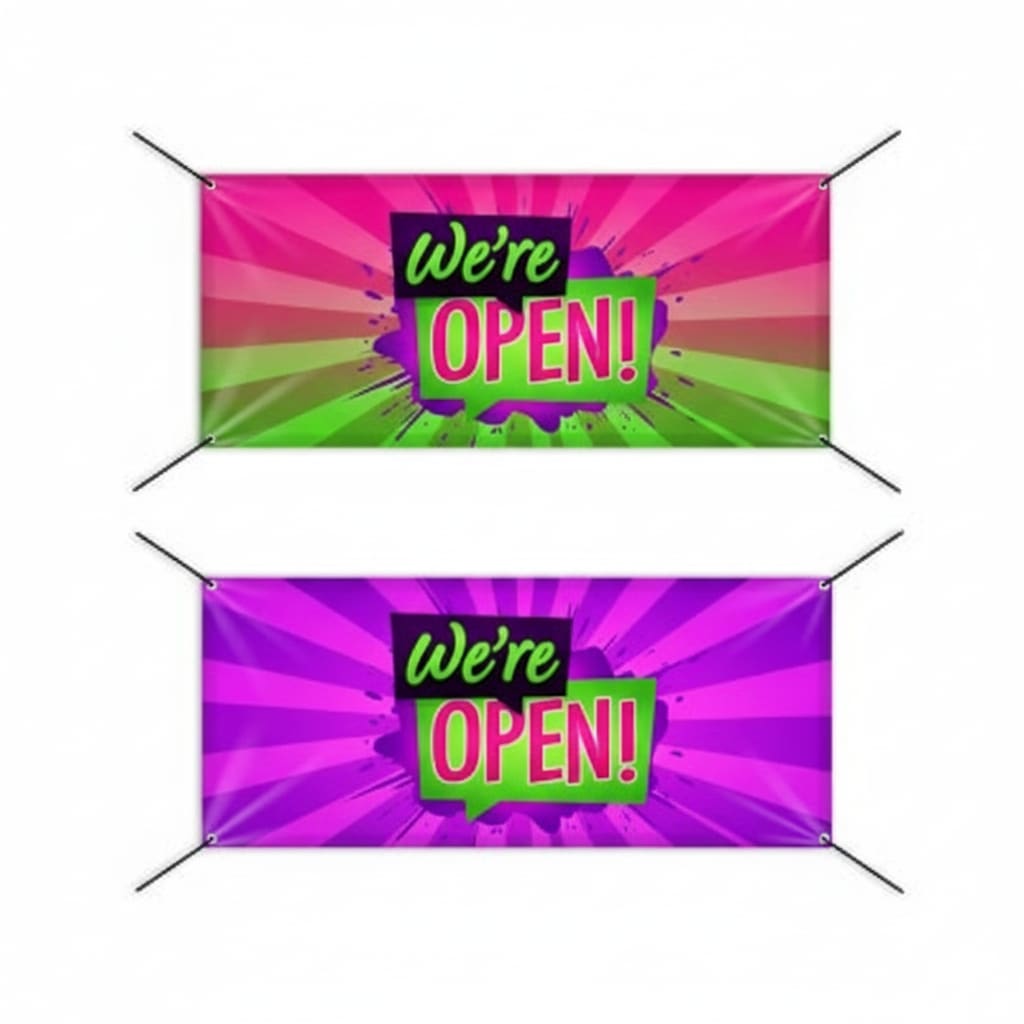
Opening a new business means competing for attention in a crowded market. While digital advertising dominates many conversations, physical print materials remain essential for making a strong first impression. When someone holds your business card, walks past your storefront signage, or receives a well-designed mailer, they form a tangible connection with your brand—one that a banner ad or social post cannot replicate.
This guide covers the essential print materials for a successful business launch, how to allocate your budget, and strategies to integrate print with your digital efforts for maximum impact.
Why does print marketing still matter in the digital age?
Physical materials create tactile experiences that build trust and credibility. Research from Newsworks shows that print ads drive 77% brand recall versus 46% for digital—a significant gap that matters when you need customers to remember your name.
Print also outperforms digital on engagement. Direct mail achieves an average 9% response rate, compared to roughly 1% for email campaigns, according to the Data & Marketing Association. And 82% of consumers say they trust print ads most when making purchase decisions.
For brick-and-mortar businesses in the Bay Area, custom window decals and professional signage provide 24/7 visibility. They work even when your website is offline, your social media posts get buried by the algorithm, or your target customer simply is not looking at a screen.
Print also bridges online discovery and in-person interaction. A well-designed flyer at a community event, a sidewalk A-frame outside your shop, or a branded postcard in a direct mail campaign—all serve as physical touchpoints that guide customers from awareness to action.
Which print materials deliver the highest ROI for a business launch?
Not all print materials are created equal. Focus your budget on items that provide ongoing value and cover the most customer touchpoints.
Business cards: your portable brand ambassador
Business cards remain the most fundamental print marketing tool. They provide essential contact information while conveying professionalism and attention to detail. A well-designed card should feature your logo, name, title, phone number, email, and website on high-quality cardstock. Consider specialty finishes like matte coating, spot UV, or embossing to make your cards memorable.
Distribution strategy matters as much as design. Keep cards accessible for networking events, client meetings, and casual encounters. Include them in every package shipment, leave stacks at complementary businesses, and ensure every team member carries a supply.
Custom signage: your 24/7 marketing workhorse
For physical locations, professional signage is one of the most important investments in your marketing arsenal. Grand opening banners create excitement and urgency during your launch phase. Permanent exterior signs establish long-term brand recognition in your community.
Consider multiple signage types to maximize visibility:
- Exterior building signs for distance recognition
- A-frame signs for sidewalk advertising
- Interior graphics that reinforce your brand experience once customers enter
Strategic placement ensures your business remains visible to potential customers even when you are closed.
Brochures and flyers: detailed information at a glance
Brochures provide space to tell your brand story, showcase products or services, and explain your value proposition. Use them as leave-behind materials during sales presentations, distribute them at trade shows, or display them in high-traffic areas.
Flyers serve similar purposes but with more focused messaging for specific promotions or events. Their single-page format makes them cost-effective for mass distribution through direct mail, door-to-door delivery, or community bulletin boards.
How should I allocate my print marketing budget?
Budget allocation depends on your business model and customer journey. Retail businesses benefit most from storefront signage and in-store displays. Service-based businesses may invest more in business cards and brochures for networking.
A practical starting framework:
- 40–50%: Permanent signage (exterior signs, window graphics)
- 20–30%: Business cards and brochures
- 20–30%: Promotional materials (banners, flyers, direct mail)
Consider production timelines when planning. Quality print materials typically require 5–10 business days for design, proofing, printing, and delivery. Order 3–4 weeks before your grand opening to allow time for revisions.
How do I integrate print with digital marketing?
Print and digital work best together. Studies from the United States Postal Service show that people are nearly 70% more likely to remember a business when they receive a physical mailer compared to seeing a digital ad alone.
Practical integration strategies:
- Add QR codes to print materials, directing customers to your website, social media profiles, or a special landing page
- Use unique promo codes or dedicated phone numbers printed on different materials to track which print investments generate the best returns
- Include printed materials in shipments (thank-you cards, discount codes for future purchases)
- Promote upcoming mail campaigns with digital ads to create anticipation
This data-driven approach helps refine your strategy over time, focusing resources on the most effective channels.
What design principles make print materials effective?
Professional design separates memorable materials from forgettable ones. Start with a strong brand foundation: consistent logo usage, a defined color palette, selected typography, and clear messaging hierarchy. These elements should remain consistent across all print materials to build recognition and trust.
Visual hierarchy guides readers through your content, emphasizing the most important information first. Use size, color, and placement strategically to draw attention to headlines, calls-to-action, and key benefits. White space prevents designs from feeling cluttered and improves readability.
Technical specifications matter for print quality:
- Resolution: 300 DPI minimum for crisp printing
- Color mode: CMYK (not RGB) for accurate color reproduction
- Bleed areas: Extend designs beyond trim lines to avoid white edges
- Safe zones: Keep critical text and logos away from edges
Request proofs before final production to catch errors and ensure colors match your expectations.
How do I build local connections with print marketing?
Small businesses thrive on community relationships, and print materials facilitate these connections effectively. Partner with complementary businesses to cross-promote through shared flyer distribution or co-branded materials. Sponsor local events and provide branded signage or banners that increase visibility while supporting your community.
Direct mail campaigns targeting specific neighborhoods remain highly effective for local businesses. Unlike digital ads competing for attention in crowded feeds, physical mail arrives with minimal competition. Personalized postcards announcing your grand opening or special promotions can drive significant foot traffic when timed strategically.
Custom acrylic signs and professional displays at farmers markets, street fairs, and community events provide portable brand presence that adapts to various venues. These materials pay for themselves through repeated use across multiple events and locations.
Ready to launch with professional print materials?
Print marketing is not dead—it is differentiated. In a world where digital ads are easily ignored, physical materials create memorable touchpoints that build trust and drive action. The key is strategic selection: prioritize items with lasting value, integrate print with your digital efforts, and track results to optimize over time.
Whether you need grand opening banners, storefront window graphics, or custom A-frame signs, starting with the right materials sets the foundation for a successful launch.
Tell us about your project—we will help you choose the right materials and get them ready before your grand opening.