Powder Coating Metal Signs: Temperature and Thickness Control for the Perfect Finish
Temperature and thickness control are critical for achieving durable, attractive powder-coated metal signs—especially in the Bay Area marine climate.
Key takeaways
- Cure temperatures typically range from 350–400°F (177–204°C) for most powder coatings
- Standard coating thickness is 2–4 mils (50–100 microns); exterior applications benefit from 3–4 mils
- Bay Area coastal humidity and salt air require extra attention to surface prep and thickness selection
- Powder coating produces zero VOCs and offers recyclable overspray—an eco-friendly finish option
- Professional thickness gauges ensure consistent results and catch defects before they become costly
Powder coating delivers some of the most durable, attractive finishes available for metal signage. But achieving that perfect result requires precise control over two critical factors: curing temperature and coating thickness. For Bay Area sign professionals dealing with coastal conditions, understanding these fundamentals makes the difference between signs that last and finishes that fail prematurely.
Whether you are working on custom aluminum signs or steel-based projects, proper powder coating technique protects your work against the unique challenges of the San Francisco Bay environment.
Why does curing temperature matter for powder-coated signs?
Temperature control is the foundation of successful powder coating. The process requires precise heat management during both preheating and curing stages—get it wrong, and the finish suffers.
According to DeFelsko Corporation, a leading manufacturer of coating inspection instruments, most powder coatings cure at temperatures between 350–400°F (177–204°C). The specific temperature depends on the powder formulation—polyester coatings for architectural applications typically cure at 356–392°F (180–200°C) with a curing time of 5–10 minutes at peak temperature.
Critical temperature checkpoints
- Preheating metal: 350–400°F prepares the substrate for optimal powder adhesion
- Curing temperature: 350–400°F for most powder formulations (verify with manufacturer specs)
- Curing duration: 10–20 minutes after the part reaches target temperature
- Cool-down: Allow gradual cooling to prevent thermal shock and finish defects
Inconsistent oven temperatures create problems. Hot spots lead to over-curing (brittle, discolored finish), while cold spots cause under-curing (soft, easily damaged coating). Professional shops use temperature monitoring throughout the process to catch variations before they ruin a batch.
How thick should powder coating be on metal signs?
Coating thickness directly impacts both durability and appearance. The ASTM D7091 standard provides guidelines for non-destructive thickness measurement on metal substrates.
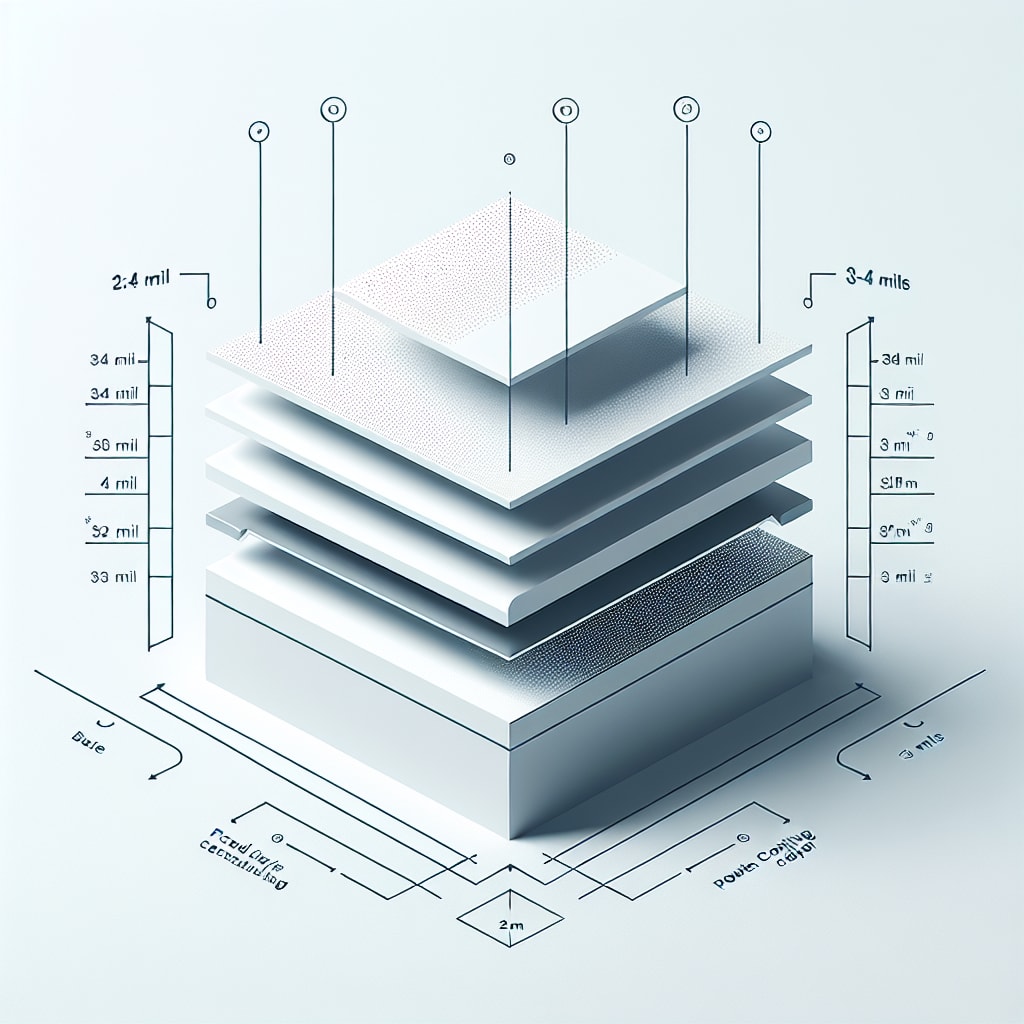
Industry-standard thickness ranges from 1–4 mils (25–100 microns), with specific applications requiring different targets:
Recommended thickness by application
- Interior applications: 2–3 mils (50–75 microns) provides adequate protection for climate-controlled environments
- Exterior applications: 3–4 mils (75–100 microns) handles UV exposure and weather
- High-wear or marine environments: 4–6 mils (100–150 microns) for maximum corrosion resistance
Too thin, and you risk incomplete coverage that allows corrosion. Too thick, and you face texture problems, poor adhesion, and increased risk of chipping. Professional thickness gauges—whether magnetic, eddy current, or ultrasonic—let you verify coating before cure and catch problems early.
What makes Bay Area conditions challenging for powder coating?
The San Francisco Bay Area presents unique challenges for metal sign finishes. The combination of salt air, frequent fog, and humidity variations stresses coatings in ways that inland locations do not.
Environmental factors to address
- Surface preparation: Thorough cleaning and pretreatment removes contaminants that compromise adhesion. Bay Area moisture means extra attention to degreasing and phosphate conversion coatings.
- Humidity control: Apply powder when humidity is manageable. High humidity during application causes adhesion problems and finish defects.
- Thickness selection: Lean toward the upper end of recommended ranges. A 4-mil coating on signs near the waterfront in San Francisco or Oakland outperforms the 2-mil minimum you might use inland.
Signs along the Embarcadero, near the Port of Oakland, or anywhere with direct marine exposure need coatings that account for salt spray and fog cycles. Investing in proper thickness and surface prep pays off in years of additional service life.
How do you maintain quality control in powder coating?
Consistent results require systematic quality checks throughout the process:
- Temperature monitoring: Use oven profilers or data loggers to verify actual part temperatures—not just oven setpoints
- Thickness testing: Measure dry film thickness (DFT) with calibrated gauges. Test multiple points per part.
- Visual inspection: Check for orange peel, pinholes, runs, and coverage uniformity
- Adhesion testing: Cross-hatch or pull-off tests confirm proper bond to substrate
Catching problems before the sign leaves the shop prevents costly callbacks and protects your reputation. A few minutes of testing saves hours of rework.
What equipment produces professional powder coating results?
Professional powder coating requires purpose-built equipment:
- Accurate temperature gauges: Digital thermometers, oven profilers, or data loggers
- Thickness measurement tools: Magnetic or eddy current gauges for metal substrates
- Quality powder guns: Electrostatic spray equipment with consistent output
- Professional-grade ovens: Convection or infrared curing ovens with reliable temperature control
For sign shops that outsource powder coating, partnering with a certified applicator who uses calibrated equipment ensures you get the finish quality your clients expect.
What are common powder coating problems and solutions?
Understanding failure modes helps you diagnose and prevent issues:
- Orange peel texture: Usually indicates improper curing temperature or excessive film build. Check oven calibration and reduce thickness.
- Uneven coverage: Often caused by inconsistent spray technique or poor grounding. Verify electrical ground and spray patterns.
- Poor adhesion: Almost always traces back to inadequate surface preparation. Improve cleaning, degreasing, and pretreatment steps.
- Outgassing (pinholes): Common with cast metals or porous substrates. Preheat parts to drive out trapped gases before coating.
Why choose powder coating for Bay Area signage?
Beyond durability, powder coating offers significant environmental and practical benefits:
- Zero VOCs: Powder coating releases no volatile organic compounds, meeting California air quality requirements
- Recyclable overspray: Unused powder can be reclaimed and reused, reducing waste
- Energy efficiency: Modern curing processes minimize energy consumption compared to liquid paint systems
- Single-coat finish: Most applications require only one coat, speeding production
For businesses throughout the Bay Area—from San Jose to Santa Rosa—powder-coated signs deliver the combination of appearance, durability, and environmental responsibility that clients increasingly demand.
How do you maintain powder-coated signs?
Properly applied powder coating requires minimal maintenance:
- Regular cleaning: Wash with mild soap and water. A soft cloth or sponge removes most dirt and salt deposits.
- Avoid abrasives: Harsh cleaners and scrubbing pads scratch the finish and compromise protection.
- Periodic inspection: Check for chips, scratches, or signs of corrosion—especially at edges and mounting points.
- Touch-up when needed: Small chips can be touched up with matching paint before corrosion spreads.
With proper care, a quality powder-coated sign can maintain its appearance and protection for 15–20 years or more in typical Bay Area conditions.
Ready to discuss your powder-coated sign project?
SF Bay Signs works with experienced powder coating partners to deliver durable, beautiful metal signage for businesses throughout the Bay Area. Whether you need aluminum signs, steel markers, or specialty metalwork, we can help you choose the right finish for your location and application.
Start your project or contact us to discuss powder coating options for your next sign.