Blade Sign Installation for Rack Attack in Berkeley
A look at how we mounted a projecting plexiglass blade sign for Rack Attack Berkeley—step by step.
Key takeaways
- Blade signs mount perpendicular to a building facade, catching foot traffic from both directions.
- Plexiglass (acrylic) panels offer a clean, modern look and weather resistance.
- Professional installation ensures secure mounting and proper alignment for maximum visibility.
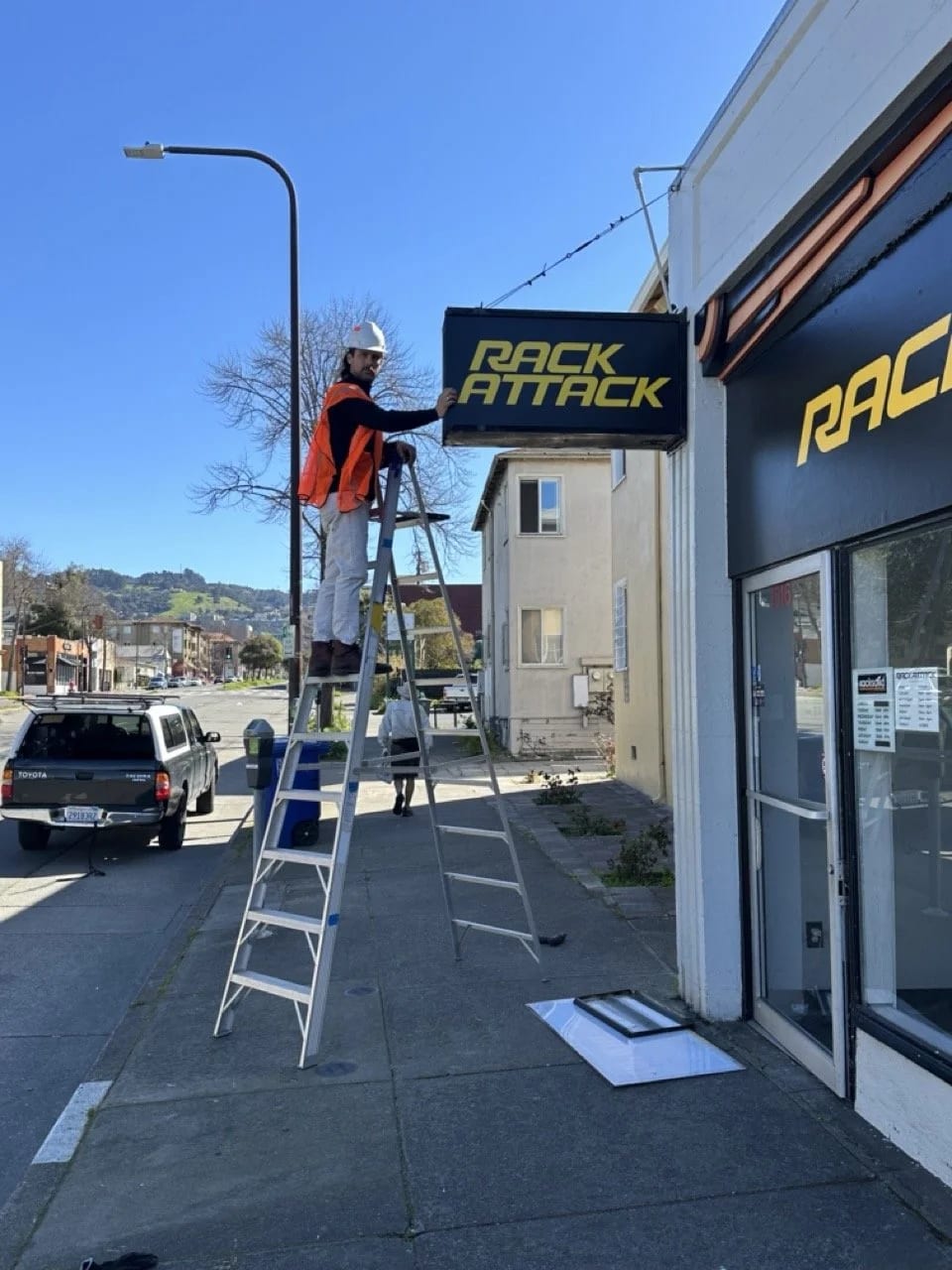
Blade signs are one of the most effective ways to grab attention on a busy street. When Rack Attack opened their Berkeley location, they needed a sign that would stand out to pedestrians and cyclists passing by on either side of the street.
We designed and installed a custom blade sign with a plexiglass (acrylic) panel mounted into a sturdy frame structure. The result: a clean, professional look that's easy to spot from a distance.
What makes a blade sign effective?
Unlike flat wall signs that face outward, blade signs mount perpendicular to the building facade. This simple orientation change makes a significant difference. Pedestrians and drivers see the sign as they approach—not just when they're directly in front of it.
As sign industry professionals note, blade signs "protrude from a building's facade, wall, or storefront" and are "highly visible to pedestrians and passing vehicles from various angles and distances" (Huston Signs).
Why Rack Attack chose a plexiglass panel
Rack Attack wanted a modern, durable sign that would hold up to Berkeley's variable weather. Plexiglass offered several advantages:
- Lightweight: Easier to mount securely without overstressing the bracket system
- Weather-resistant: Handles rain, sun, and temperature swings without warping or fading
- Clean appearance: Provides a smooth, professional finish that fits Rack Attack's brand
How we handled the installation
The installation process required careful alignment to ensure the sign sits level and catches maximum visibility. Here's what we focused on:
- Site assessment: Checked the mounting surface, measured clearances, and confirmed bracket placement
- Frame mounting: Secured the blade sign frame to the building facade with heavy-duty hardware
- Panel fitting: Precisely fit the plexiglass panel into the frame structure
- Final alignment: Adjusted the sign to ensure it hangs level and faces the correct direction for foot traffic
The timelapse video at the top of this post shows the full process in action.
Tips if you're considering a blade sign
Planning a blade sign for your storefront? Here are a few things to keep in mind, based on advice from sign professionals (Tinkering Monkey):
- Keep it simple: An effective blade sign is easy to identify from a distance. Avoid clutter.
- Check permits early: Most cities require permits for projecting signs. Start the paperwork before you finalize your design.
- Plan ahead: If you have an opening date, get started early. Fabrication and permitting can take weeks.
- Materials matter: Talk to your sign company about options that withstand outdoor conditions in your area.
Ready to add a blade sign to your storefront?
Blade signs work well for retail shops, restaurants, and service businesses in high-foot-traffic areas like downtown Berkeley. If you're interested in a similar installation, start your project with SF Bay Signs. We handle design, fabrication, and installation throughout the Bay Area.
You can also browse our gallery to see more examples of our work.